






Posted At: Oct 22, 2026 - 37 Views
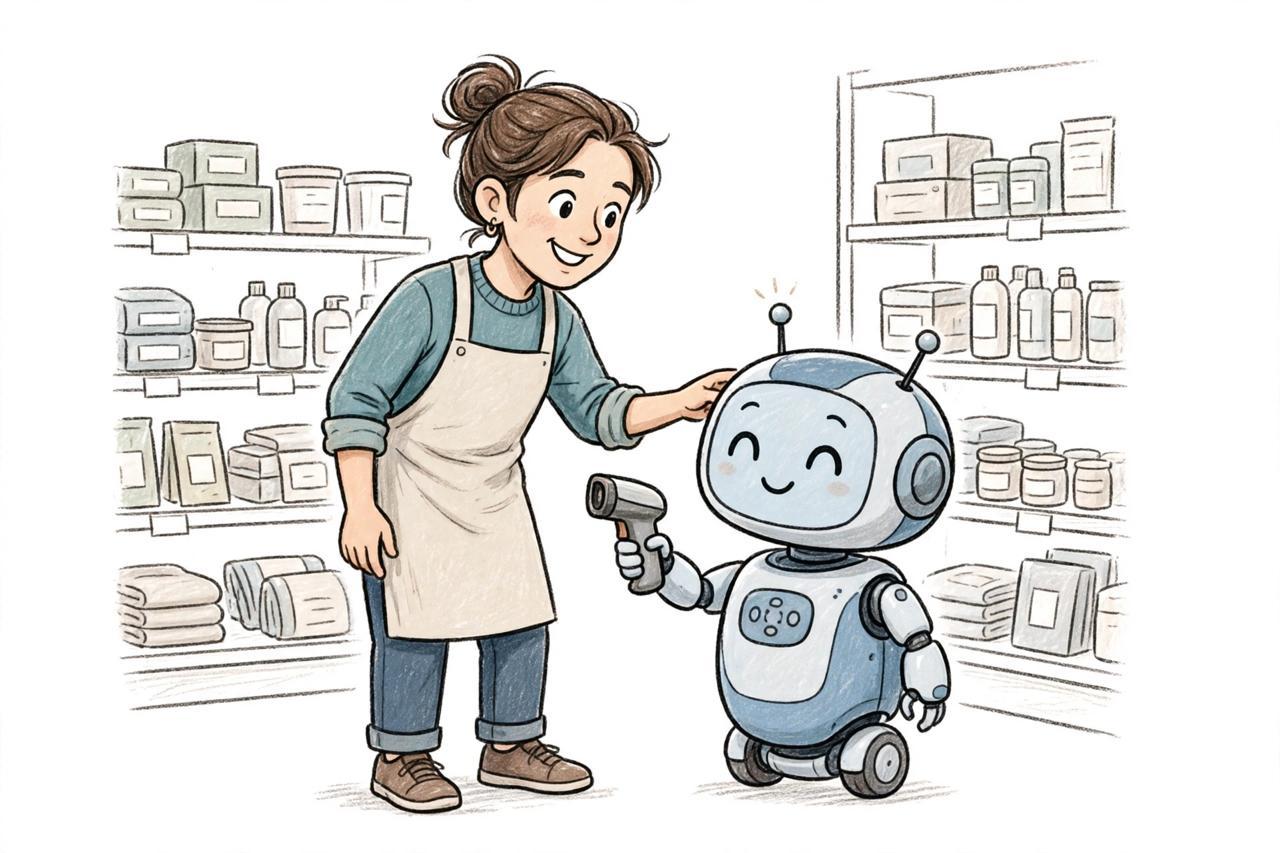
Artificial intelligence is changing how work gets done. From generating content and analyzing data to writing code, automating processes, and supporting business decisions, AI is taking on tasks that once required significant amounts of human time and effort. This transformation has raised an important question: if machines can perform more cognitive tasks, will human skills become less important?
The evidence increasingly points in the opposite direction.
As AI becomes better at processing information and completing predictable tasks, uniquely human capabilities can become more valuable. Creativity, critical thinking, empathy, judgment, communication, collaboration, and the ability to understand complex situations are difficult to reduce to simple instructions. The future of work may therefore depend less on choosing between humans and AI and more on understanding how the two can work together effectively.
The Shift From Doing Tasks to Solving Problems
For years, many jobs have involved a combination of repetitive execution and higher-level problem-solving. Employees might spend hours collecting information, preparing reports, organizing documents, analyzing spreadsheets, or responding to routine requests before reaching the part of the work that actually requires judgment.
AI is increasingly capable of handling many of these repetitive activities.
That creates an important opportunity. Instead of spending most of their time completing tasks, people can dedicate more attention to defining problems, interpreting results, making decisions, communicating ideas, and creating new approaches.
This does not make human expertise unnecessary. It changes where that expertise is applied.
An AI system can generate several possible solutions, but a person still needs to determine which solution makes sense in the real-world context. Similarly, AI can identify patterns in data, but humans need to understand why those patterns matter and what action should follow.
The value therefore shifts from simply producing an output to understanding what should be done with that output.
Creativity Becomes a Strategic Capability
One of the most interesting effects of AI adoption is the growing importance of creativity.
Generative AI can produce text, images, designs, ideas, code, and multiple variations within seconds. But generating possibilities is not the same as knowing which possibility is meaningful, original, relevant, or appropriate.
Human creativity remains important because people bring experiences, cultural understanding, emotions, intuition, and context into the creative process.
AI Can Expand the Creative Process
AI can help people brainstorm ideas, explore alternatives, overcome creative blocks, and rapidly test different approaches. Instead of replacing creativity, it can increase the number of possibilities people can explore.
A designer can use AI to generate concepts before refining the strongest one. A marketer can explore different campaign directions and then apply human understanding to select the most relevant message. A software developer can ask AI to suggest approaches while using their own experience to evaluate architecture, usability, security, and maintainability.
The strongest creative process may therefore become a combination of human imagination and machine-assisted exploration.
Critical Thinking Matters More When AI Produces More Answers
AI can produce answers quickly, but speed does not automatically mean accuracy.
As organizations rely more heavily on AI-generated information, people need stronger critical-thinking skills to evaluate what machines produce. Employees must be able to question assumptions, identify inconsistencies, recognize missing information, and determine whether an AI-generated recommendation is appropriate.
This becomes especially important when AI is used in areas where decisions can have significant consequences.
A useful AI-enabled workflow should not simply ask, “What did the system recommend?” It should also ask:
What information was used to reach this recommendation?
Is the information reliable and complete?
What assumptions might the system be making?
What risks could result from following the recommendation?
Does the recommendation make sense in the real-world context?
These questions require judgment. And judgment becomes increasingly important as AI systems become more capable.
The Growing Value of Human Judgment
AI can process enormous amounts of information, but organizations operate in environments filled with ambiguity.
Business decisions often involve competing priorities, incomplete information, changing customer expectations, ethical considerations, regulatory requirements, and unpredictable events. There may not be a single objectively correct answer.
Human judgment helps navigate these situations.
A manager deciding whether to launch a product, a physician evaluating complex information, a financial professional assessing risk, or a technology team deciding how to deploy an AI system must consider factors beyond what an algorithm can calculate.
The ability to balance evidence with context, experience, responsibility, and consequences will remain a critical human capability.
Empathy Cannot Be Reduced to Automation
Another area where human skills become especially important is empathy.
Organizations are not made up of data points alone. They are made up of customers, employees, partners, communities, and other people with different experiences and expectations.
AI can analyze customer feedback, identify sentiment, summarize conversations, and recommend responses. These capabilities can improve efficiency, but meaningful relationships still depend on human understanding.
A customer may not simply want a technically correct answer. They may want to feel understood. An employee facing a difficult situation may need more than an automated response. A team dealing with conflict may require listening, trust, and emotional awareness.
AI can support these interactions, but human empathy gives them depth.
Communication Becomes More Important in an AI-Enabled Workplace
As AI takes over more execution-oriented tasks, communication can become one of the most important skills employees develop.
People increasingly need to explain complex ideas, frame problems clearly, provide useful instructions to AI systems, interpret AI-generated results, and communicate decisions to others.
This creates a new kind of workplace fluency.
Employees may need to communicate across both human and machine systems. They may write prompts, review AI outputs, translate technical information for nontechnical colleagues, and explain why a particular AI recommendation should or should not be followed.
The ability to communicate clearly can therefore influence how effectively organizations use AI.
Human-AI Collaboration Is the Bigger Opportunity
The future of work is unlikely to be defined simply by humans competing against machines. A more productive model is collaboration.
AI can provide speed, scale, pattern recognition, automation, and rapid information processing. Humans can provide context, creativity, judgment, empathy, leadership, and accountability.
When these strengths are combined, the result can be more powerful than either one working independently.
A New Division of Strengths
A practical human-AI collaboration model could look like this:
AI handles: repetitive tasks, large-scale analysis, information synthesis, pattern identification, and rapid content generation.
Humans handle: judgment, strategy, empathy, complex problem framing, ethical decisions, relationship building, and accountability.
Both contribute to: ideation, problem-solving, decision support, experimentation, and continuous improvement.
The objective is not to make humans behave more like machines. It is to allow machines to handle more machine-like work so people can focus on work where human capabilities create greater value.
Leadership Will Require More Than Technical AI Knowledge
As AI becomes embedded across organizations, leadership itself will also evolve.
Understanding how AI works will matter, but leaders will need more than technical knowledge. They will need to understand how AI affects people, processes, culture, decision-making, and organizational trust.
Leaders will increasingly have to answer questions such as:
Where should AI be used?
Where should humans remain directly involved?
How much autonomy should AI systems have?
How should employees be trained?
How should AI-generated decisions be reviewed?
How can organizations maintain trust while increasing automation?
These are not purely technical questions. They require judgment, communication, responsibility, and a strong understanding of people.
The Skills Organizations Should Invest In
AI transformation should therefore not be treated only as a technology investment. It should also be a human-capability investment.
Organizations that want to benefit from AI can strengthen several areas at the same time:
AI literacy can help employees understand what AI can and cannot do.
Critical thinking can help people evaluate AI-generated information and recommendations.
Creativity can help teams identify new opportunities rather than simply automate existing processes.
Communication and collaboration can help employees work effectively with AI systems and with one another.
Leadership and judgment can help organizations make responsible decisions about AI adoption.
Continuous learning can help employees adapt as AI capabilities and workplace expectations continue to evolve.
The goal is not to train every employee to become an AI engineer. It is to help people understand how AI can complement their existing expertise.
From Automation to Augmentation
The biggest opportunity may come from moving beyond the idea of AI as an automation tool.
Automation asks: What tasks can a machine perform instead of a person?
Augmentation asks: How can a machine help a person perform better?
That distinction matters.
An AI system that automatically summarizes hundreds of documents can save time. But an employee who uses those summaries to identify a new business opportunity creates additional value. An AI coding assistant can generate code quickly, but an experienced developer who uses it to explore solutions faster can potentially build better software. An AI analytics system can identify trends, but human expertise determines which trends deserve action.
AI becomes most powerful when it increases human capability rather than simply reducing human involvement.
The Future of Work Will Reward Adaptability
One thing is certain: the skills required for work will continue to change.
Some technical tasks will become automated. New roles will emerge. Existing roles will be redesigned. Employees will increasingly work alongside AI systems that can learn, generate, recommend, and eventually take action.
In this environment, adaptability may become one of the most valuable capabilities of all.
People who are willing to learn new tools, question established workflows, experiment with AI, and continuously improve their skills will be better positioned to work effectively in an AI-enabled environment.
Organizations will also need to create cultures where experimentation and learning are encouraged rather than treating AI adoption as a one-time technology project.
The Human Advantage Is Evolving
AI is undoubtedly changing the value of different skills. But the story is not simply about machines becoming capable and humans becoming less relevant.
Instead, AI is changing the definition of valuable human work.
When machines can generate more information, humans need to become better at interpreting it. When AI can produce more ideas, humans need to become better at selecting meaningful ones. When automation can execute more tasks, people can spend more time solving complex problems and building relationships.
The future advantage may therefore belong to people and organizations that understand how to combine machine intelligence with human intelligence.
Conclusion: AI Needs Human Strengths
AI may automate many tasks, but it does not eliminate the need for creativity, critical thinking, empathy, judgment, communication, and leadership. In many cases, the more capable AI becomes, the more important these skills can become.
The organizations that gain the most from AI will not necessarily be those that automate the largest number of jobs. They may be the ones that understand where AI performs best, where human judgment matters most, and how to connect the two effectively.
The future of work is not simply human versus AI.
It is about building a better partnership between them—where AI provides speed, scale, and intelligence, while people provide purpose, context, creativity, judgment, and responsibility.
AI may be changing the way we work. But human skills are still what make that work meaningful, valuable, and impactful.