






Posted At: Sep 12, 2026 - 8 Views
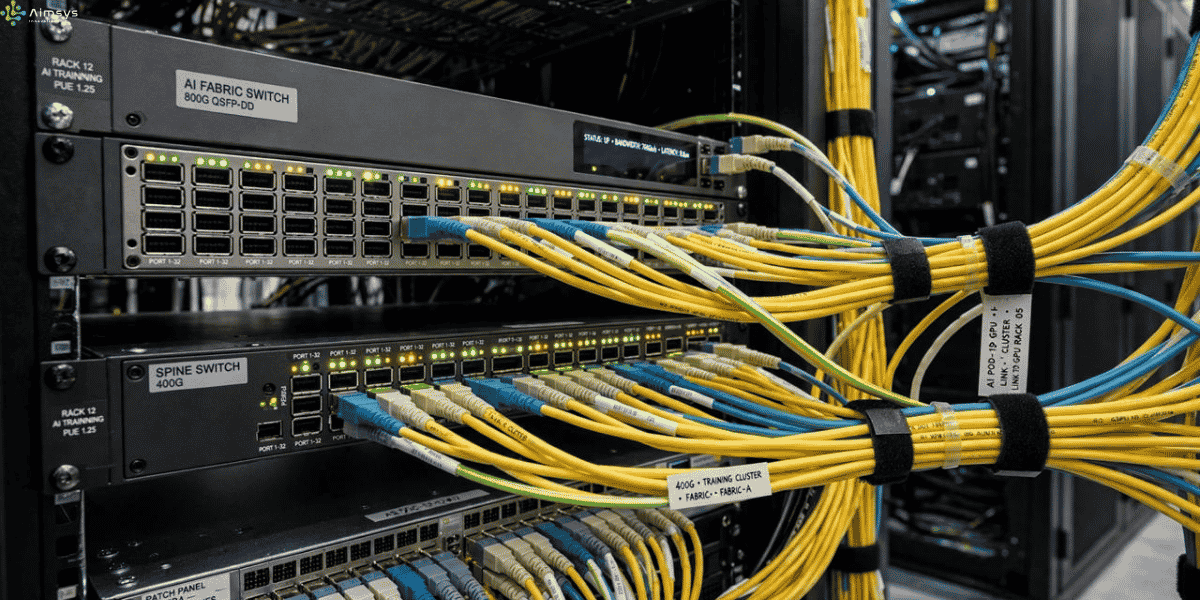
Artificial intelligence is entering a new phase of enterprise adoption. The conversation has largely centered on increasingly powerful models, generative AI applications, and AI agents. Yet as businesses move from experimentation to real-world deployment, another opportunity is becoming increasingly important: the infrastructure required to make AI work at enterprise scale.
AI models may be the visible layer of the AI economy, but they depend on a much broader technology ecosystem. Compute, cloud platforms, data infrastructure, networking, cybersecurity, storage, integration, observability, and specialized AI infrastructure all play a critical role in turning AI capabilities into reliable business systems.
This is why the next major AI opportunity may not come only from building better models. It may come from building the infrastructure that allows thousands of AI workloads, agents, and applications to operate efficiently, securely, and continuously.
AI Is Becoming an Infrastructure Problem
Early AI adoption often involved relatively contained experiments. A company could test a generative AI assistant, build a proof of concept, or integrate an AI API into an existing application.
Enterprise-scale adoption is different.
As organizations deploy AI across customer service, software development, analytics, operations, finance, marketing, and decision-making, the volume and complexity of AI workloads increase dramatically.
Businesses now need to answer questions such as:
Where should AI workloads run?
How should organizations manage increasing compute requirements?
How can data be made available to AI systems securely?
How should AI applications communicate with enterprise systems?
How can organizations monitor AI performance and costs?
How can AI infrastructure scale without compromising security?
These questions shift the focus from AI models alone to the infrastructure surrounding them.
The AI Stack Is Much Bigger Than the Model
An AI model is only one component of an enterprise AI architecture.
Behind every intelligent application is a technology stack that may include data platforms, compute resources, cloud infrastructure, APIs, databases, networking, security controls, orchestration layers, and monitoring systems.
Compute Is the Foundation
AI workloads can require significant computational resources, particularly when organizations train, fine-tune, or run large models at scale.
As AI adoption expands, businesses need infrastructure capable of handling different types of workloads efficiently. This creates opportunities around specialized processors, accelerated computing, distributed infrastructure, and optimized cloud environments.
The strategic challenge is not simply acquiring more compute. It is using compute efficiently according to workload requirements.
Data Infrastructure Becomes More Important
AI systems depend on data for training, retrieval, context, evaluation, and decision-making.
Enterprise AI therefore requires reliable data pipelines and architectures capable of bringing together information from multiple business systems.
Organizations need data that is:
Accessible → Reliable → Governed → Contextual → AI-ready
Without this foundation, even highly capable AI models may struggle to deliver meaningful business outcomes.
Cloud and Hybrid Infrastructure Will Play a Critical Role
AI workloads are not necessarily suited to a single infrastructure environment.
Some businesses may rely heavily on public cloud platforms, while others may need hybrid or specialized infrastructure because of regulatory requirements, data sensitivity, latency, cost, or performance considerations.
This creates demand for architectures that allow organizations to manage AI workloads across different environments.
Infrastructure Must Become More Flexible
Enterprise AI environments need to support changing workloads. An application may require significant compute resources during one period and substantially less during another.
Flexible infrastructure can help businesses scale capacity according to demand rather than building environments around fixed assumptions.
This makes infrastructure optimization an important part of AI strategy.
Networking and Data Movement Matter More Than Ever
AI systems increasingly depend on large volumes of data moving between applications, models, databases, and infrastructure components.
As AI workloads become more distributed, networking performance can become a critical factor in overall system efficiency.
High-performance connectivity, optimized data movement, and reliable communication between infrastructure components can therefore become strategic considerations for enterprises building AI platforms.
The AI infrastructure opportunity is consequently broader than compute alone. The systems that connect compute, data, applications, and users are equally important.
The Rise of AI-Native Data Infrastructure
Traditional enterprise data architectures were not necessarily designed for today's AI workloads.
AI applications may require different approaches to data retrieval, contextual information, unstructured content, real-time processing, and model interaction.
Data Needs Context, Not Just Storage
AI systems need more than large volumes of information. They need relevant information in a form that can be retrieved and interpreted effectively.
This is driving greater attention toward modern data architectures, semantic layers, vector search, knowledge systems, real-time data pipelines, and other technologies that help AI applications access useful context.
For enterprise leaders, the question is increasingly moving from:
“How much data do we have?”
to:
“Can our AI systems access the right data at the right time and understand its context?”
AI Agents Will Increase Infrastructure Demand
The rise of AI agents could make infrastructure requirements even more complex.
A traditional AI application may respond to an individual request. An AI agent can potentially perform multiple steps, interact with different systems, call tools, retrieve information, and continue working toward an objective.
That creates a different infrastructure pattern.
From AI Applications to AI Workloads
An organization with hundreds or thousands of AI agents may need infrastructure capable of managing continuous interactions between agents, enterprise systems, data platforms, and external services.
This creates new requirements around:
Agent orchestration
Identity and access management
API connectivity
Workflow execution
Monitoring and observability
Security and governance
Cost management
As agentic AI expands, infrastructure becomes the operating environment for a growing digital workforce.
Security Becomes an Infrastructure Priority
The expansion of AI infrastructure also expands the potential attack surface.
AI systems may interact with sensitive enterprise data, business applications, customers, employees, and external services. Organizations therefore need security architectures designed specifically for AI-enabled environments.
Protecting AI Systems at Every Layer
Security needs to extend across data, models, applications, APIs, infrastructure, and user access.
Organizations should consider:
Data protection and access controls, Identity management, Secure API integration, Model and application monitoring, AI-specific threat detection, Governance and auditability
Security cannot be added after AI infrastructure has already been deployed at scale. It needs to be incorporated into the architecture from the beginning.
Observability and AI Operations Will Become Essential
Traditional application monitoring is not enough for increasingly complex AI environments.
Businesses need visibility into how AI systems perform, how much infrastructure they consume, what they cost, and where failures occur.
Managing AI Performance and Cost
Enterprise AI leaders need to understand not only whether an AI system works, but also whether it is economically sustainable.
Important considerations include:
Performance, latency, utilization, reliability, scalability, and cost per workload.
AI infrastructure that delivers impressive technical performance but becomes prohibitively expensive at scale will struggle to create sustainable business value.
This makes AI operations and infrastructure optimization increasingly important disciplines.
The Biggest Opportunity May Be in the Supporting Ecosystem
The AI market is often viewed through the lens of model providers and AI applications. But every AI application depends on a supporting ecosystem.
That ecosystem includes infrastructure providers, cloud platforms, data technologies, networking, cybersecurity, integration platforms, observability tools, and specialized hardware.
This creates a broader opportunity for businesses that can solve the practical challenges of deploying and operating AI at scale.
The winners may not always be the companies building the most powerful model. They may also be the companies enabling thousands of organizations to deploy AI reliably.
Enterprise AI Requires an Infrastructure Strategy
Organizations should avoid treating infrastructure as a technical afterthought.
AI infrastructure decisions can influence cost, scalability, security, performance, and the speed at which new AI capabilities can be introduced.
Build for the Workloads You Actually Need
Enterprises should begin by understanding their AI use cases and workload requirements.
A customer-service assistant, predictive analytics platform, software development agent, and autonomous workflow system may require very different infrastructure capabilities.
A strong strategy therefore starts with business requirements and then designs the infrastructure around them.
Design for Scale From the Beginning
An AI pilot may work perfectly with a small user base. Scaling that same system to thousands of employees or customers can introduce completely different challenges.
Infrastructure planning should account for future growth, changing workloads, security requirements, data volumes, and operational complexity.
What CEOs and CTOs Should Watch
For business leaders, the AI infrastructure supercycle represents more than another technology investment opportunity. It represents a fundamental shift in how enterprises build digital capabilities.
Leaders should consider:
Infrastructure readiness: Can current systems support AI workloads?
Data readiness: Is enterprise data accessible and governed?
Scalability: Can AI applications grow without excessive cost?
Security: Are AI workloads protected across the technology stack?
Integration: Can AI connect with existing business systems?
Economics: Can infrastructure costs remain sustainable as usage grows?
These questions can determine whether AI remains a collection of experiments or becomes a scalable enterprise capability.
The Next Phase of the AI Economy
The AI industry is moving beyond the race to build increasingly capable models. The next phase will involve building the infrastructure that allows those models, applications, and agents to operate continuously across the global economy.
That means the AI opportunity extends across the entire technology stack.
Compute enables intelligence. Data provides context. Infrastructure provides scale. Networks connect systems. Security creates trust. Orchestration enables action.
Together, these layers form the foundation of the AI-powered enterprise.
Conclusion: Building the Infrastructure Behind the AI Future
The biggest AI opportunity may ultimately extend far beyond the models themselves.
As organizations move toward AI-native operations, they will need infrastructure capable of supporting growing volumes of data, increasingly complex workloads, autonomous agents, real-time applications, and continuous AI-driven processes.
The companies that build this foundation will play a critical role in determining how quickly and effectively enterprises can adopt AI.
The next AI transformation will therefore not be defined only by how intelligent models become, but by how effectively businesses can build, connect, secure, and scale the infrastructure that brings that intelligence to life.