






Posted At: Oct 02, 2026 - 46 Views
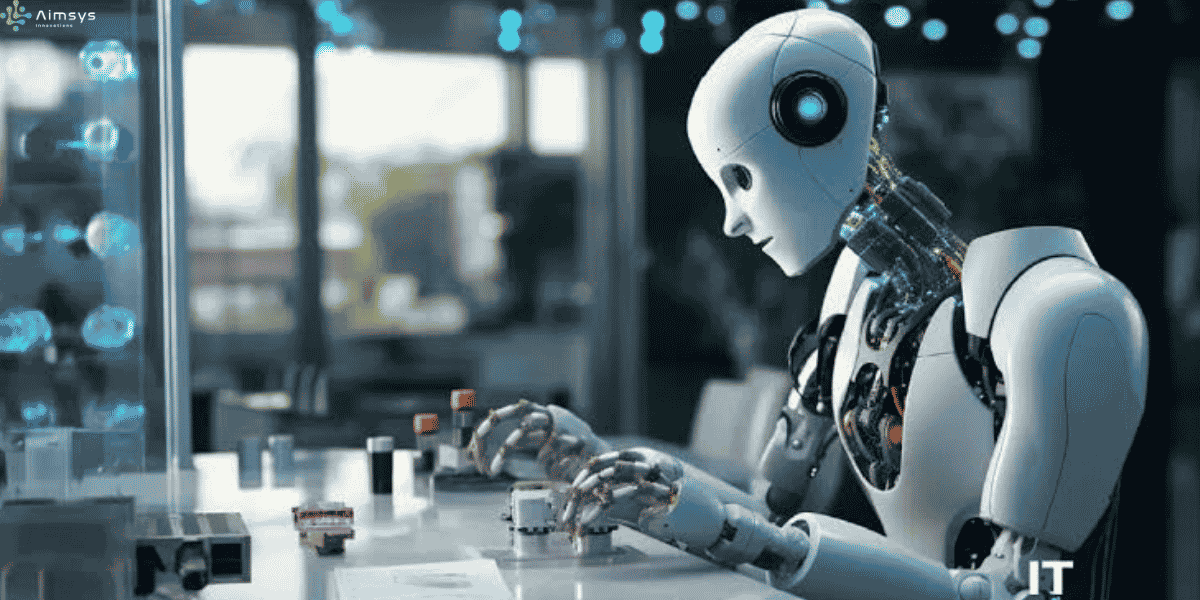
Artificial intelligence is moving beyond screens, software, and digital workflows. The next stage of AI is bringing intelligence into the physical world—where machines, robots, vehicles, factories, warehouses, and industrial infrastructure operate.
This evolution is being driven by the convergence of AI models, sensors, computer vision, robotics, edge computing, and connected industrial systems. Instead of simply analyzing what has already happened, intelligent systems can increasingly understand what is happening around them and respond to changing conditions.
This is the emerging world of Physical AI.
From Digital Intelligence to Physical Intelligence
Traditional AI has largely operated in digital environments. It can analyze documents, predict demand, generate content, identify patterns, and support business decisions. Physical AI adds another dimension: the ability to perceive and interact with the real world.
A physical AI system can combine information from cameras, sensors, machines, location systems, and operational data to understand its environment. It can then use AI models to interpret that information and support or execute a response.
The fundamental cycle becomes:
Sense → Understand → Decide → Act → Learn
This shift matters because physical environments are dynamic. Machines experience changing conditions, production lines encounter unexpected events, and warehouses constantly change as goods move through them.
Why Industrial Systems Are Becoming AI-Driven
Industrial environments already generate enormous amounts of data. Equipment produces sensor readings, production lines generate operational information, cameras capture visual data, and connected systems continuously record performance.
The challenge is turning this information into useful action.
Moving From Monitoring to Prediction
Traditional monitoring can tell teams when something has already gone wrong. AI can help identify patterns that indicate something may go wrong in the future.
For example, changes in vibration, temperature, pressure, or machine performance could indicate potential equipment issues. AI can analyze these signals alongside historical information to identify unusual behavior.
This creates an opportunity to move from reactive maintenance toward predictive and condition-based operations.
Physical AI in Manufacturing
Manufacturing is one of the environments where Physical AI can have a particularly direct impact.
AI-powered computer vision can inspect products, identify defects, and monitor production processes. Intelligent systems can analyze equipment performance and support maintenance decisions. Robotics can become more adaptive as machines gain better perception of their surroundings.
Rather than treating each machine as an isolated automated unit, Physical AI can connect machines, data, and intelligence into a more responsive production environment.
Smarter Quality Inspection
Visual inspection has traditionally depended heavily on manual processes or predefined machine-vision rules. AI can introduce greater flexibility by learning patterns from large collections of images and production data.
The system can identify unusual patterns and flag potential quality issues for further inspection.
The result is not simply faster inspection. It is the possibility of creating a continuous intelligence layer across production quality.
Robotics Is Entering a More Adaptive Era
Industrial robots have been used for decades, particularly for repetitive and highly controlled activities.
Physical AI introduces the possibility of robots that can respond more intelligently to their surroundings.
Instead of following exactly the same sequence regardless of what is happening around them, AI-enabled robots can potentially use cameras, sensors, spatial information, and learned models to understand changing conditions.
From Fixed Instructions to Adaptive Behavior
Consider a warehouse where objects may not always be placed in exactly the same position. A robot with stronger perception capabilities can potentially recognize the object, understand its location, and adjust its movement accordingly.
This creates a transition from fixed automation toward adaptive automation.
The technology is still developing, and real-world deployment requires careful testing, but the direction is significant: machines are becoming increasingly capable of responding to their environments rather than simply following predetermined instructions.
The Data Challenge Behind Physical AI
Physical AI depends on much more than AI models.
A single industrial environment can generate information from:
Cameras and computer vision systems
Temperature and pressure sensors
Equipment telemetry
Machine logs
Location systems
Production schedules
Maintenance records
Human inputs
The challenge is connecting these signals and giving them enough context to support reliable decisions.
Context Matters More Than Data Volume
A temperature increase by itself may not indicate a machine problem. Its meaning could depend on the machine's workload, operating conditions, historical behavior, and other sensor readings.
This is why Physical AI requires high-quality, contextualized, and connected industrial data.
Better AI does not automatically come from collecting more information. It comes from making the right information available at the right time and understanding how different signals relate to each other.
Digital Twins: Creating a Bridge Between AI and Reality
Digital twins can strengthen Physical AI by creating digital representations of physical machines, assets, or environments.
These virtual representations can incorporate operational data and help teams understand how physical systems behave over time.
Testing in a Digital Environment
AI systems can potentially use digital environments to simulate different scenarios before changes are introduced into physical operations.
For example, a production team could evaluate the potential impact of a process change or maintenance strategy in a simulated environment before applying it to actual equipment.
This creates a valuable layer between AI experimentation and real-world execution.
Edge AI Brings Intelligence Closer to Machines
Physical systems often need to respond quickly.
A robot, industrial machine, or autonomous vehicle may not be able to wait for every decision to travel to a centralized cloud environment and back.
This is where edge computing becomes important.
By processing selected AI workloads closer to the physical system, organizations can reduce latency and support faster responses.
A Hybrid Architecture
The future of Physical AI is unlikely to be entirely edge-based or entirely cloud-based.
Instead, different workloads can operate at different layers.
Edge systems can handle time-sensitive perception and decisions.
Cloud platforms can support large-scale data processing, model development, analytics, and centralized management.
This combination can create a more flexible architecture for intelligent physical systems.
Human and Machine Collaboration
Physical AI does not necessarily mean removing people from industrial environments.
In many situations, the more valuable opportunity is to create better collaboration between people and intelligent machines.
A machine can continuously monitor equipment while an experienced technician interprets unusual situations. A robot can handle repetitive physical tasks while workers focus on supervision and complex problem-solving.
Human expertise remains especially important when situations fall outside expected conditions.
Keeping Humans in the Loop
The level of human involvement should depend on the consequences of the decision.
Some AI-driven actions may be low-risk and highly repetitive. Others may affect safety, equipment, production, or people and require human approval.
This makes risk-based autonomy an important concept for Physical AI.
Safety Becomes a Core Design Requirement
An incorrect AI-generated recommendation in a digital environment can often be corrected relatively easily. An incorrect action from a physical system can have much more serious consequences.
Physical AI therefore requires stronger safeguards.
Important considerations include:
Real-time monitoring: Understanding what the system is doing as it operates.
Defined operating boundaries: Preventing AI from taking actions outside approved limits.
Fail-safe mechanisms: Ensuring systems can move into a safe state when something goes wrong.
Human approval: Requiring intervention for high-impact decisions.
Continuous testing: Evaluating system behavior across changing conditions.
The more autonomous a physical system becomes, the more important these controls become.
Across these sectors, the underlying opportunity is similar: use intelligence to make physical operations more adaptive, responsive, and efficient.
What Makes Physical AI Different?
Physical AI is not simply another form of automation.
Traditional automation generally follows predefined rules. Conventional AI can analyze information and provide predictions. Physical AI combines intelligence with perception and physical action.
That creates a more complex technology stack involving:
Perception → AI models → Data → Edge computing → Connectivity → Control systems → Physical action
Every layer needs to work reliably.
A highly capable AI model cannot compensate for poor sensor data. A good perception system cannot create value if the machine cannot safely execute the required action.
Physical AI therefore requires an end-to-end system approach.
The Challenges of Bringing AI Into the Physical World
Real-world environments are unpredictable.
Sensors can fail. Network connections can be interrupted. Equipment can behave differently under changing conditions. AI models can encounter situations they have never seen before.
Testing is also more complicated.
Software can often be tested repeatedly in controlled environments. Physical systems need to be evaluated against real-world variables, equipment behavior, safety requirements, and human interaction.
This makes simulation, digital twins, continuous monitoring, and controlled deployment increasingly important.
Building the Foundation for Physical AI
Organizations exploring Physical AI do not need to transform every physical operation at once.
A practical approach can begin with a specific operational problem where intelligent perception or adaptive decision-making could create measurable value.
The foundation can then be built progressively:
Connect machine and sensor data.
Improve data quality and context.
Introduce edge and AI capabilities where needed.
Test systems in simulated or controlled environments.
Establish clear safety and access controls.
Keep human oversight for high-impact decisions.
Monitor performance continuously.
Scale successful applications gradually.
This allows Physical AI to develop through measured experimentation rather than uncontrolled automation.
The Next Generation of Industrial Intelligence
The evolution of AI is increasingly moving from understanding information to interacting with the physical world.
Machines are becoming better at seeing, sensing, interpreting, predicting, and responding. Robotics is becoming more adaptive. Digital twins are connecting virtual models with real-world assets. Edge computing is bringing intelligence closer to where decisions need to happen.
Together, these technologies can create industrial environments that respond dynamically to changing conditions.
But the future of Physical AI will not be determined by autonomy alone.
It will depend on how effectively organizations combine intelligence, infrastructure, safety, data, and human expertise.
Conclusion: Intelligence That Can Act
Physical AI represents a major shift in how artificial intelligence can create value.
AI is no longer limited to generating information or analyzing digital data. It is increasingly becoming capable of understanding physical environments and supporting actions within them.
From factories and warehouses to vehicles, energy systems, and connected infrastructure, Physical AI can help create operations that are more responsive and adaptive.
The real transformation comes when intelligent systems can move through the complete cycle:
See → Understand → Decide → Act.
The next era of AI may therefore be defined not only by how intelligently machines can think, but by how safely and effectively they can interact with the real world.