






Posted At: Oct 07, 2026 - 12 Views
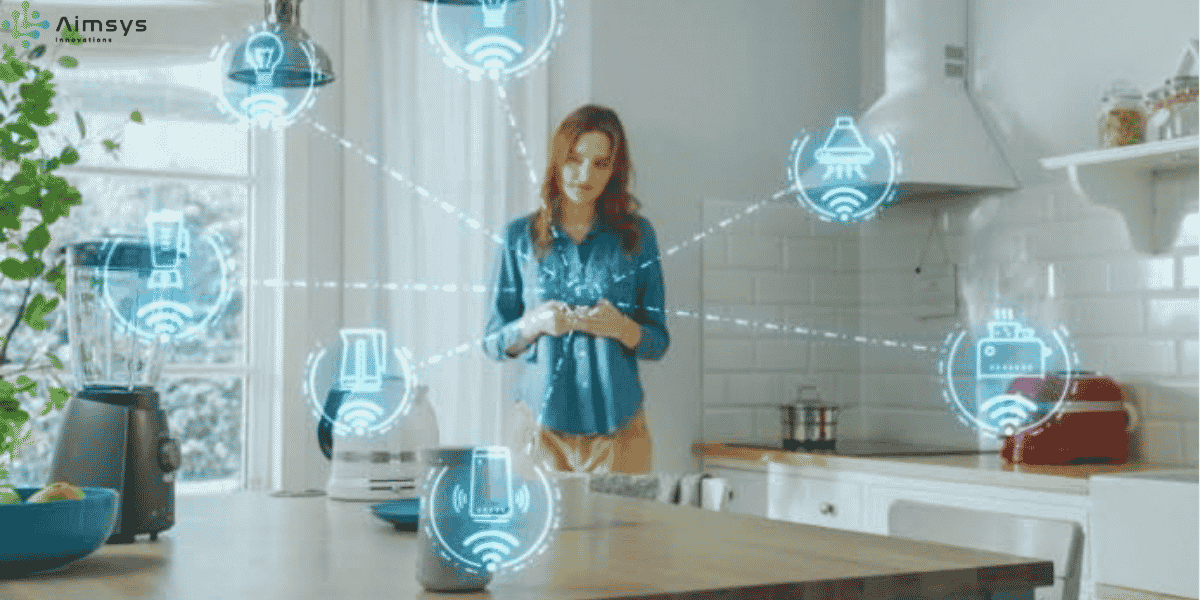
For decades, home appliances have become increasingly convenient, but most of them have remained dependent on human instructions. A washing machine waits for a program to be selected. An oven waits for temperature and cooking time to be configured. An air conditioner responds to a remote control or thermostat. A refrigerator can monitor temperature, but traditionally has limited ability to make decisions on its own.
Artificial intelligence is beginning to change that model.
The next generation of smart appliances will not simply respond to commands. They will increasingly understand context, recognize patterns, learn from usage, and make decisions based on changing conditions. This is shifting home automation from remote-controlled convenience toward intelligent and increasingly autonomous environments.
The transformation is not about making appliances more complicated. It is about making them more capable of understanding what people need and responding with less manual intervention.
The Evolution From Remote Control to Intelligence
Home automation has already gone through several stages. Each stage has reduced the amount of manual effort required to operate everyday devices.
From Manual Operation to Remote Control
The first major shift was moving from completely manual appliances to remotely controlled devices. Consumers could turn lights on or off, adjust temperature, change television channels, or start appliances without physically interacting with them.
Remote control introduced convenience, but the appliance still depended on explicit instructions.
A person had to decide what should happen and when it should happen.
The Rise of Connected Smart Appliances
The next stage introduced internet connectivity. Appliances could connect to mobile applications and cloud platforms, allowing users to monitor and control them remotely.
A washing machine could send a notification when a cycle finished. A thermostat could be adjusted while someone was away from home. A refrigerator could provide information about temperature or certain stored items.
Connectivity created visibility, but intelligence was still relatively limited.
AI Changes the Operating Model
Artificial intelligence introduces a different possibility.
Instead of simply waiting for instructions, an appliance can analyze information and determine what action may be appropriate.
An intelligent thermostat can learn temperature preferences and household patterns. An AI-powered washing machine could potentially adjust a cycle based on load characteristics. A smart oven could recognize cooking conditions and make adjustments during preparation.
The appliance begins moving from “What should I do?” to “Based on what I understand, what should happen next?”
AI Is Making Appliances More Context-Aware
The real value of AI-powered appliances comes from their ability to understand context rather than relying only on fixed commands.
Learning Household Patterns
AI systems can identify recurring patterns in how appliances are used.
For example, a home may have predictable heating and cooling requirements during different parts of the day. A household may regularly use certain appliances at specific times or follow recurring routines.
Instead of requiring users to configure every action manually, AI can use these patterns to make more relevant decisions.
Understanding Environmental Conditions
Smart appliances can also combine information from sensors and external data sources.
Temperature, humidity, energy consumption, occupancy, time of day, and other environmental signals can help an appliance determine how it should operate.
An air-conditioning system, for instance, does not necessarily need to maintain the same operating pattern throughout the day. Its behavior could adapt based on indoor conditions and household activity.
Moving Beyond Fixed Rules
Traditional automation often relies on predefined rules: if something happens, perform a specific action.
AI can make these systems more flexible by identifying patterns that may not have been explicitly programmed.
This creates an important distinction between automation based on instructions and intelligence based on context.
Autonomous Appliances Could Change Everyday Experiences
As AI becomes more capable, appliances can begin handling more decisions independently.
Smarter Kitchens
The kitchen is one of the areas where autonomous appliances could have significant impact.
AI-enabled ovens, refrigerators, coffee machines, and other appliances can potentially work together to create more connected experiences.
An intelligent oven could assist with cooking settings, while a smart refrigerator could monitor food-related information and provide recommendations.
The objective is not simply to connect every appliance. It is to create an environment where appliances can understand their role within a broader household workflow.
Intelligent Cleaning and Laundry
Cleaning appliances are also moving toward greater autonomy.
Robotic vacuum systems already demonstrate how machines can navigate environments and make decisions about where to move. Future systems can become more context-aware by understanding household patterns and adapting their behavior accordingly.
Washing machines can similarly use sensors and AI to better understand loads and adjust operating parameters.
The result could be appliances that require fewer manual decisions while still giving users control when needed.
Adaptive Climate Control
Heating, ventilation, and air-conditioning systems represent another important area for AI.
Instead of maintaining a fixed temperature regardless of circumstances, AI-driven systems can potentially adjust their operation based on occupancy, weather, preferences, and energy conditions.
This can improve comfort while creating opportunities for more efficient energy consumption.
The Connected Home Becomes an Intelligent System
The biggest transformation may not come from individual AI appliances. It may come from appliances working together.
From Smart Devices to Connected Ecosystems
A connected home can contain dozens of devices generating information.
Lighting systems, thermostats, security devices, kitchen appliances, entertainment systems, cleaning robots, and energy equipment can all produce data.
When these systems operate independently, their intelligence remains limited to individual devices.
Connecting them can create a broader view of what is happening inside the home.
AI Can Coordinate Multiple Appliances
Imagine a home where an AI system understands that residents have left the house.
Instead of requiring individual commands, the system could coordinate multiple actions according to predefined preferences. Certain appliances could enter energy-saving modes, security systems could adjust settings, and climate systems could change their operating patterns.
The value comes from coordination rather than simply automation.
The Home Becomes More Adaptive
An intelligent home can potentially respond dynamically to changing circumstances.
Instead of following the same schedule every day, it can adapt to occupancy, routines, environmental conditions, and user preferences.
This moves home automation closer to an adaptive operating environment.
AI Can Make Home Energy Management Smarter
Energy efficiency is becoming an increasingly important consideration for connected homes. AI can help households understand and manage how energy is consumed.
Understanding Energy Consumption
Smart appliances can generate detailed information about electricity usage.
AI can analyze these patterns to identify which appliances consume the most energy, when consumption peaks, and where efficiency improvements may be possible.
This can provide homeowners with more useful information than a simple monthly energy bill.
Optimizing Appliance Usage
AI can potentially coordinate appliance usage based on energy conditions and household requirements.
For example, certain energy-intensive activities could be shifted to more suitable periods when the system has the necessary information and the user has permitted such automation.
This creates an opportunity to move from simply monitoring energy consumption to intelligently managing it.
Supporting More Sustainable Homes
As connected homes become more intelligent, energy optimization could become an important part of the overall value proposition.
AI can help balance comfort, convenience, and efficiency rather than treating them as completely separate objectives.
Data Becomes the Foundation of Autonomous Appliances
AI-powered home automation depends heavily on data. Appliances need information to understand their environment, identify patterns, and make appropriate decisions.
Sensors Create Real-Time Context
Modern appliances can collect information through sensors that monitor temperature, movement, humidity, energy consumption, load conditions, and other factors.
This information gives AI systems a real-time understanding of the environment.
Without accurate sensor information, autonomous decision-making becomes significantly more difficult.
Privacy Becomes More Important
The same data that makes smart homes useful can also become highly sensitive.
Information about occupancy, routines, appliance usage, location, and household behavior can reveal significant details about people's lives.
As a result, AI-powered home automation needs strong privacy controls.
Users should understand what information is being collected, why it is required, where it is processed, and how long it is retained.
Edge AI Can Reduce Unnecessary Data Movement
Some AI processing can potentially happen directly on devices rather than sending every piece of information to the cloud.
Edge processing can reduce latency and may also help limit unnecessary transfer of sensitive information.
This can be particularly valuable for applications that need rapid decisions or involve highly personal household data
Trust and Control Will Define Autonomous Homes
Greater autonomy creates greater responsibility. Consumers may be comfortable allowing an appliance to make low-risk decisions, but they may expect stronger controls for actions with larger consequences.
Not Every Decision Should Be Fully Autonomous
An AI system can potentially decide when to adjust temperature or optimize appliance settings without asking for permission every time.
More consequential actions may require confirmation.
For example, an appliance should not automatically make purchases, share personal information, or change important household settings without clearly defined authorization.
Users Need Visibility
Autonomous systems should not become invisible systems.
Users should be able to understand what their appliances are doing and why.
Clear notifications, activity histories, permission settings, and manual overrides can help maintain confidence in autonomous home systems.
Control Should Always Remain Available
Even highly automated homes need an effective manual control layer.
People should be able to override AI decisions, change preferences, disable automation, or disconnect systems when necessary.
The goal of autonomy is to reduce unnecessary effort—not remove human control.
The Future of Home Automation Is More Than Smart Appliances
The next stage of home automation will likely be defined by how intelligence is distributed across the entire environment.
From Devices to AI Agents
Individual appliances may eventually operate alongside AI agents that coordinate activities across multiple systems.
A household AI agent could potentially understand a user's goals and coordinate different devices accordingly.
Instead of separately controlling heating, lighting, appliances, and security systems, users could communicate their intent through a single intelligent interface.
Personalized Home Environments
AI could also make homes more personalized.
Different household members may have different preferences for temperature, lighting, entertainment, cooking, and other activities.
Intelligent systems can potentially learn these preferences and balance them when making decisions.
The Autonomous Home Is Becoming a Platform
The home may increasingly function as an integrated digital environment rather than a collection of individual appliances.
Appliances, sensors, AI models, cloud platforms, edge computing, and connected services can work together to create an environment that continuously senses, learns, and responds.
Conclusion: From Smart Appliances to Intelligent Homes
The evolution of home automation is moving through a fundamental shift.
The first generation of connected appliances focused on remote control. The next generation is moving toward context awareness, prediction, coordination, and autonomous decision-making.
AI can help appliances understand household patterns, adapt to environmental conditions, optimize energy consumption, personalize experiences, and coordinate activities across the home.
But intelligence alone will not define the success of autonomous homes.
The future will also depend on privacy, security, transparency, user control, reliable data, and responsible AI design.
The goal should not be to create homes where machines make every decision.
It should be to create homes where technology quietly handles repetitive complexity while people remain in control of the experiences that matter.
The smart home was about connecting appliances.
The AI-powered home will be about making those appliances understand how to work together.