





Posted At: Oct 19, 2026 - 6 Views
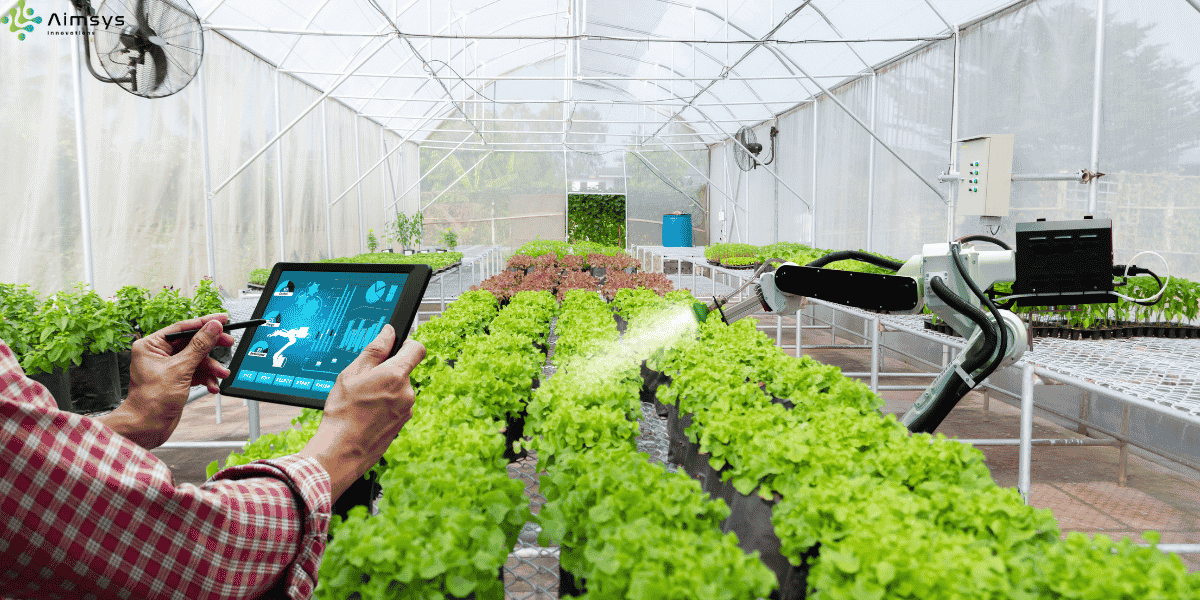
Food safety has always depended on visibility, consistency, and timely decisions. From the moment crops are grown and livestock are raised to the point where food reaches restaurants, retailers, and consumers, thousands of decisions can affect quality and safety.
AI is creating new opportunities to make those decisions smarter.
By combining artificial intelligence with sensors, computer vision, predictive analytics, connected supply chains, and real-time data, food organizations can identify risks earlier, monitor conditions more continuously, and respond faster when something goes wrong. The result could be a food system that is not only more efficient, but also more transparent, traceable, and resilient.
AI Is Bringing Intelligence to the Entire Food Journey
From Production to Processing
Food safety begins long before products reach a processing facility. Agricultural conditions, environmental changes, crop health, livestock conditions, and farming practices can all influence the quality of food entering the supply chain.
AI can analyze information from sensors, satellite imagery, weather data, farm equipment, and historical records to identify unusual patterns. This can help producers detect potential risks earlier and make more informed decisions about irrigation, crop health, disease prevention, and harvesting.
The value comes from moving from reactive decisions toward more predictive approaches.
Smarter Food Processing
Once food enters processing facilities, maintaining consistent conditions becomes critical. Temperature, humidity, sanitation, equipment performance, and handling processes can all influence food quality.
AI-powered monitoring systems can continuously analyze operational data and identify deviations from expected conditions. Instead of relying only on periodic inspections, organizations can use real-time intelligence to flag potential problems as they emerge.
This can help teams investigate issues sooner and reduce the likelihood that unsafe products move further through the supply chain.
Computer Vision Could Transform Food Quality Inspection
Detecting Problems Faster
Traditional food inspection often depends heavily on manual processes. Human inspectors remain essential, but manual inspection can become challenging when facilities operate at high volumes.
Computer vision can provide another layer of monitoring.
AI-powered cameras can analyze products as they move through production lines and identify visual anomalies such as discoloration, damage, contamination indicators, or inconsistencies in appearance.
This does not eliminate human inspection. Instead, it can help teams focus attention on products or processes that require closer examination.
Consistency at Scale
One of the biggest advantages of computer vision is consistency.
An AI system can continuously evaluate large volumes of products using predefined criteria, helping organizations identify patterns that might be difficult to detect through occasional manual checks.
When combined with human expertise, this can create a more comprehensive quality-control process.
Predictive AI Can Help Identify Food Safety Risks Earlier
Moving From Reaction to Prediction
Many food safety processes are traditionally triggered after an issue has already been detected. AI can help shift this approach toward prediction.
Machine learning systems can analyze historical incidents, environmental conditions, production data, temperature records, supplier information, and other signals to identify combinations of factors associated with increased risk.
The objective is not simply to predict that something might go wrong. It is to provide teams with enough information to investigate potential risks before they become larger problems.
Predicting Supply Chain Disruptions
Food safety is closely connected to supply chain conditions.
Delays, temperature changes, transportation problems, storage failures, and unexpected changes in demand can all affect food quality.
AI can analyze supply chain data to identify unusual patterns and potentially predict where disruptions could occur. This can give organizations more time to adjust logistics, inspect shipments, or take corrective action.
AI Can Strengthen Food Traceability
Following Food Across the Supply Chain
Modern food products can pass through multiple farms, processors, distributors, warehouses, retailers, and food-service locations before reaching consumers.
When information is fragmented across these stages, identifying the source of a problem can become difficult.
AI can help connect information across different systems and create a more complete view of a product's journey.
This can make it easier to understand where a product came from, how it was handled, and where it moved through the supply chain.
Faster Response During Food Safety Incidents
Traceability becomes especially important when contamination or quality issues are discovered.
The faster organizations can identify affected products and locations, the faster they can respond.
AI-powered systems can help analyze large amounts of supply chain information, identify relationships between products and locations, and support faster investigations.
This can reduce the time required to move from detection to action.
Smart Sensors Are Creating Real-Time Food Intelligence
Monitoring Conditions Continuously
Food quality can depend heavily on environmental conditions.
Temperature sensors, humidity sensors, location tracking, and connected monitoring devices can collect information throughout storage and transportation.
AI can analyze these signals continuously rather than waiting for manual checks.
If conditions move outside acceptable ranges, intelligent systems can generate alerts and help teams determine whether intervention is required.
Protecting the Cold Chain
The cold chain is particularly important for products that require controlled temperatures.
A small temperature deviation may become significant if it continues for an extended period.
AI can analyze temperature patterns, transportation data, and historical conditions to identify potential problems and prioritize shipments that may require attention.
This creates a more proactive approach to maintaining food quality during transportation and storage.
AI Is Making Food Safety More Data-Driven
Connecting Fragmented Information
Food organizations generate large amounts of information across farms, factories, warehouses, transportation networks, laboratories, suppliers, and retail operations.
The challenge is not simply collecting data. It is connecting it.
AI becomes more useful when information from different sources can be brought together and interpreted in context.
A connected data environment can help organizations understand relationships between production conditions, quality results, logistics events, and safety indicators.
Better Data Leads to Better Decisions
AI systems are only as reliable as the information surrounding them.
Incomplete records, inaccurate sensor readings, outdated supplier information, or disconnected systems can reduce the quality of AI-driven insights.
Building strong data foundations therefore becomes an important part of AI-powered food safety.
Organizations need trusted data, consistent standards, appropriate governance, and reliable connectivity before AI can deliver dependable intelligence at scale.
AI Can Help Reduce Food Waste While Supporting Safety
Food waste and food safety are closely connected.
Products may be discarded because of uncertain shelf life, storage conditions, damaged packaging, or concerns about quality.
AI can analyze product conditions, historical shelf-life patterns, environmental data, and demand signals to support more informed decisions.
Instead of relying only on fixed expiration assumptions or broad safety margins, organizations could potentially use more context-aware approaches to determine which products require attention.
This can help reduce unnecessary waste while maintaining appropriate safety controls.
Human Expertise Still Matters
AI can analyze information at a scale that humans cannot easily match, but food safety involves more than data patterns.
Professionals bring domain expertise, regulatory understanding, contextual judgment, and accountability.
For that reason, AI should support food safety teams rather than operate without appropriate oversight.
High-risk decisions may require human review, while lower-risk monitoring activities can increasingly be automated.
The strongest model is likely to be a combination of AI-driven detection and human-driven judgment.
Trust, Transparency, and Responsible AI Matter
As AI becomes more involved in food safety decisions, organizations will need to understand how systems reach their conclusions.
If an AI system flags a shipment, identifies a production anomaly, or predicts a potential safety risk, teams need enough visibility to investigate the underlying information.
Monitoring, audit trails, explainability, access controls, and appropriate human oversight can help organizations build confidence in AI-supported food safety processes.
Trust becomes especially important when AI recommendations influence decisions that can affect consumers.
Building a Safer Food System With AI
AI is not a single solution for food safety. Its value comes from connecting multiple capabilities across the food journey.
A modern AI-enabled food system could combine:
Predictive analytics to identify emerging risks
Computer vision for quality inspection
IoT sensors for real-time monitoring
AI-powered traceability for faster investigations
Supply chain intelligence for disruption detection
Data platforms for connected food-safety information
Human oversight for critical decisions
Together, these technologies can create a more connected approach to food safety—from production to processing, transportation, retail, and consumption.
The Future of Food Safety Is Becoming More Predictive
The food industry is moving toward a future where safety is not only about detecting problems after they happen.
It is increasingly about understanding conditions in real time, recognizing patterns, predicting potential risks, and taking action earlier.
AI can help make that possible by turning large volumes of food and supply-chain data into actionable intelligence.
But the goal should not be to replace the people responsible for keeping food safe. It should be to give them better information, earlier warnings, and more powerful tools for making decisions.
Conclusion: From Farm to Fork, Intelligence Can Make Food Safer
Food safety depends on every stage of the journey. A problem that begins on a farm can eventually affect a processing facility, transportation network, retailer, restaurant, or consumer.
AI offers an opportunity to connect these stages and create greater visibility across the entire food ecosystem.
From predicting agricultural risks and inspecting products to monitoring cold chains and improving traceability, AI can help organizations move toward a more proactive model of food safety.
The future of food may not simply be about producing more food.
It may be about building a system intelligent enough to see risks earlier, respond faster, reduce waste, and protect consumers from farm to fork.