






Posted At: Aug 18, 2026 - 335 Views
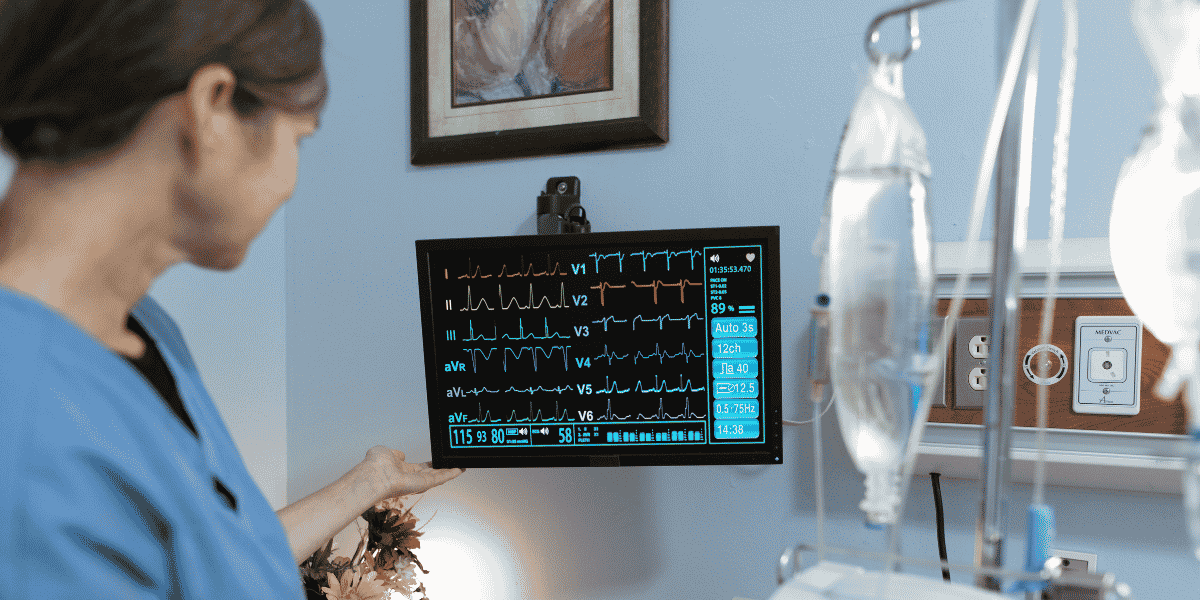
Cardiac rhythm management is entering a new era in which continuous data, intelligent analytics, connected devices, and clinical expertise are becoming increasingly interconnected. Traditional approaches to rhythm care often depend on episodic ECGs, scheduled follow-ups, and clinicians reviewing large volumes of physiological information. While these methods remain essential, they can make it difficult to identify intermittent rhythm changes or interpret continuous streams of patient data efficiently.
Artificial Intelligence is creating another layer of capability. AI can help analyze ECG signals, wearable-device data, remote monitoring information, and clinical records to identify patterns that may warrant clinical attention. Recent research has explored AI across atrial fibrillation detection, risk assessment, personalized management, and remote monitoring, while the FDA continues to authorize AI-enabled cardiovascular technologies.
For healthcare CEOs and CTOs, the opportunity is larger than introducing another diagnostic technology. AI can become part of a connected cardiac-care ecosystem that helps clinicians manage growing data volumes, supports earlier identification of potential rhythm abnormalities, and enables more scalable models of patient monitoring.
The Rhythm Management Challenge Is Becoming a Data Challenge
Modern cardiac care generates information from multiple sources. ECG systems, wearable devices, implantable monitors, electronic health records, remote telemetry platforms, and patient-generated data can all contribute to the clinical picture.
The challenge is not simply collecting this information. It is making sense of it at the right time.
A patient experiencing intermittent atrial fibrillation, for example, may not show an abnormal rhythm during a short clinical evaluation. Continuous or repeated monitoring can generate substantially more information, but that also creates a larger interpretation burden for healthcare teams.
AI can help address this data-to-decision gap by analyzing large volumes of physiological information and surfacing patterns for qualified clinicians to review. Research has specifically explored AI-enabled ECG and wearable photoplethysmography for identifying AF, including potentially subclinical or intermittent cases.
ECG Intelligence Moves Beyond Traditional Interpretation
Electrocardiograms contain complex waveform information that can be difficult to evaluate at scale. Machine learning and deep learning models can analyze ECG signals for patterns associated with specific cardiac conditions or rhythm abnormalities.
This does not mean AI should replace clinical interpretation. Instead, AI can function as an additional analytical layer that helps prioritize information and support clinician review.
The emerging value can be seen across several areas:
Earlier Signal Detection
AI models can examine ECG data for subtle patterns that may not be obvious through conventional screening alone.
Rhythm Classification
Machine learning can assist with classifying rhythm patterns and identifying signals that require further clinical evaluation.
Risk Identification
AI can analyze physiological patterns alongside other information to help estimate the likelihood of future rhythm-related events.
Workflow Prioritization
When clinicians are managing large volumes of monitoring data, intelligent systems can help surface potentially important findings for review.
FDA-authorized cardiovascular AI technologies already include machine-learning-based notification and ECG-related applications, demonstrating that AI-enabled cardiac analysis is moving beyond research into regulated clinical products.
Continuous Monitoring Changes the Patient-Care Model
Cardiac rhythm management is increasingly extending beyond the hospital or clinic.
Wearables, ambulatory ECG systems, implantable monitors, and connected cardiac devices can collect physiological information over longer periods. Remote monitoring has already been recognized as a way to support earlier identification of actionable events and faster clinical decision-making for cardiovascular implantable electronic devices.
AI can add another layer by helping organize and interpret the resulting data.
Instead of clinicians manually reviewing every signal with equal priority, intelligent systems can help identify patterns that may deserve attention. This can make continuous monitoring more scalable as the volume of connected-patient data increases.
A recent FDA authorization for an updated BodyGuardian remote monitoring system illustrates how AI-based functionality is being incorporated into cardiovascular monitoring workflows; the system is designed to collect and analyze ECG and other health parameters for clinician evaluation.
From Detection Toward Risk-Aware Care
The long-term opportunity for AI extends beyond identifying whether an abnormal rhythm is present at a particular moment.
Researchers are increasingly investigating models that use ECGs and multimodal patient information to estimate future risk, including the possibility of identifying people who may have undetected or future atrial fibrillation.
This creates the potential for a more proactive model of cardiac care.
Instead of relying exclusively on a patient reporting symptoms or waiting for an abnormal rhythm to appear during a scheduled evaluation, clinicians could potentially use AI-generated risk signals to determine who may benefit from additional monitoring or assessment.
Such systems should be viewed as decision-support tools rather than autonomous diagnostic authorities. Their value depends on clinical validation, appropriate workflow integration, and professional interpretation.
Connecting AI With the Broader Cardiac Ecosystem
AI becomes more useful when it is connected to the systems clinicians already use.
A modern cardiac-care environment may involve:
ECG systems for rhythm data.
Wearable devices for longer-term physiological monitoring.
Remote telemetry platforms for continuous or ambulatory monitoring.
Electronic health records for clinical context.
Imaging systems for structural and functional cardiac information.
Patient applications for symptoms, medication information, and engagement.
Connecting these sources can create a more complete information environment for clinical teams. Instead of reviewing each data source independently, healthcare organizations can develop workflows in which relevant information is brought together before clinical decisions are made.
For CTOs, interoperability therefore becomes as important as the AI model itself.
Making Remote Cardiac Care More Scalable
One of the biggest operational opportunities is scalability.
As remote monitoring expands, healthcare organizations may face growing volumes of alerts and physiological data. Sending every signal directly to clinicians without intelligent prioritization could increase workload rather than reduce it.
AI can potentially help categorize signals, identify patterns, prioritize alerts, and reduce unnecessary manual review. FDA research on AI-enabled patient monitoring specifically identifies potential benefits such as more informative detection of patient changes and reducing false alarms, while emphasizing the need for safe and effective medical-device development.
For healthcare enterprises, the objective should therefore be smarter monitoring rather than simply more monitoring.
Personalization Becomes More Practical
Cardiac patients do not all have the same risk profiles, monitoring requirements, or clinical histories.
AI can help clinicians work with a broader range of patient information when evaluating individual situations. Models may incorporate ECG signals, longitudinal monitoring data, clinical records, and other relevant information to support more personalized risk assessment.
Research into AI-supported AF management has explored applications including risk prediction, treatment optimization, remote monitoring, and personalized management.
However, personalization should not be interpreted as automated treatment selection. High-impact clinical decisions require appropriate evidence, clinician oversight, and validated workflows.
The Human Role Becomes More Valuable
AI-enabled cardiac care should not be framed as a replacement for electrophysiologists, cardiologists, nurses, or monitoring teams.
Its stronger role is as an intelligence layer that helps professionals manage information more effectively.
AI can process signals rapidly. Clinicians provide context.
AI can identify patterns. Clinicians determine clinical significance.
AI can prioritize information. Clinicians make decisions.
This division of responsibilities can allow healthcare professionals to spend less time navigating raw data and more time applying clinical judgment, communicating with patients, and coordinating care.
The Technology Architecture Behind AI-Enabled Cardiac Care
For healthcare enterprises, implementing AI requires more than purchasing an algorithm.
The underlying architecture needs to support secure data movement, interoperability, model monitoring, cybersecurity, and clinical workflow integration.
A scalable architecture may include:
Data Connectivity
Secure connections between ECG systems, remote monitoring platforms, EHRs, wearables, and other relevant sources.
Intelligent Processing
AI and machine-learning capabilities that can analyze physiological signals and generate appropriate outputs.
Clinical Workflow Integration
Interfaces that allow qualified healthcare professionals to review AI-generated information within existing care processes.
Governance and Monitoring
Processes for evaluating model performance, managing updates, documenting intended use, and monitoring real-world behavior.
The FDA's current guidance landscape includes recommendations addressing AI-enabled device software lifecycle management and clinical decision-support software, highlighting the importance of regulatory and lifecycle considerations as AI becomes embedded in medical products.
Trust Is the Foundation
Cardiac rhythm management involves high-consequence decisions, making trust particularly important.
Healthcare organizations must understand how AI systems perform across different patient populations, clinical environments, devices, and data conditions. Bias, poor data quality, model drift, interoperability problems, and unclear outputs can reduce clinical confidence.
Explainability is also important. Clinicians need appropriate context around AI-generated signals rather than simply receiving unexplained alerts.
Responsible deployment should therefore include:
Clinical validation before widespread implementation.
Performance monitoring after deployment.
Human oversight for important clinical decisions.
Data protection for sensitive health information.
Clear intended-use boundaries so AI is not applied beyond what has been validated.
Recent reviews of AI in AF management similarly identify transparency, bias, data integration, regulatory requirements, and clinician trust as important barriers to broader implementation.
The Business Case for Healthcare Leaders
AI-enabled cardiac care can support a broader strategy around scalable, data-driven healthcare delivery.
Potential organizational value includes more efficient monitoring workflows, improved use of clinical resources, stronger remote-care capabilities, and better integration of patient-generated data into care processes.
The opportunity lies in building an architecture that can support AI across multiple cardiovascular workflows rather than implementing isolated algorithms.
The strongest strategy is likely to focus on measurable outcomes such as:
Monitoring workflow efficiency
Clinician review burden
Alert prioritization
Time to clinical review
Patient engagement
System interoperability
Model performance and reliability
The technology should serve these outcomes rather than becoming the objective itself.
What Comes Next for Cardiac Rhythm Management
The next generation of cardiac rhythm management will likely be increasingly connected, continuous, and intelligence-assisted.
AI-enabled ECG analysis, wearable monitoring, remote telemetry, predictive modeling, and clinical decision support are converging into a broader digital ecosystem. As these technologies mature, the boundary between periodic testing and continuous cardiac intelligence may become increasingly fluid.
The goal should not be to create a healthcare system where machines make every cardiac decision.
It should be to create one where clinicians have better information at the right time.
That means thinking beyond individual AI tools and focusing on the infrastructure, governance, interoperability, and clinical workflows required to make intelligent cardiac care sustainable.
The Future of Cardiac Care Is Connected Intelligence
AI is giving cardiovascular organizations new ways to interpret rhythm data, support remote monitoring, identify potential risk signals, and manage increasingly complex information environments.
The opportunity is significant, but so is the responsibility. Cardiac AI must be clinically validated, securely deployed, appropriately governed, and integrated into workflows that preserve professional judgment.
The organizations that approach AI as a long-term clinical and technology capability—not simply as another software feature—will be better positioned to build scalable models of cardiac care.
The future of cardiac rhythm management is not about replacing clinical expertise with artificial intelligence. It is about combining clinical expertise with intelligent systems to make every signal more meaningful, every workflow more connected, and every decision better informed.